Supplier Performance Management: Metrics, Process & Tools

Supplier Performance Management: Metrics, Process & Tools
When a supplier is chronically late, cuts corners on quality, or invoices a different price than the one you negotiated, the damage rarely shows up as one clean number. Instead, it shows up as rush freight charges, customer complaints, and someone in finance trying to figure out why the invoice doesn't match what was promised.
Supplier performance management gives procurement teams a structured way to catch these problems, hold vendors to contract standards, and turn scattered spend data into decisions you can defend. Because expectations are clear and measured the same way every time, it also has the power to strengthen supplier relationships.
Quick answer:
- Why it matters. 81% of supply chain and procurement professionals say a supplier disruption hit their business in the past two years, and catching supplier problems early is how you limit the damage.
- How it works. It includes three repeatable steps: set expectations and standards, monitor and score performance, then review and act.
- Ways to fix underperformance. Corrective action ranges from improvement plans and SLA renegotiation to shifting spend toward stronger performers.
- Where Order.co fits. Order.co brings supplier spend, order status, and purchase history into one place instead of scattered spreadsheets and email threads, and its AI flags unusual spend so you can act on supplier problems sooner.
Download the free tool: Vendor Scorecard Template
What is supplier performance management?
Supplier performance management (SPM) is the systematic process of measuring, analyzing, and improving how well suppliers deliver on agreed-upon standards, including quality, delivery reliability, cost accuracy, compliance adherence, and responsiveness. Even when procurement teams call the process vendor performance management instead, the objective stays the same: ensure suppliers meet contractual commitments, catch supply chain risk early, drive continuous improvement, and support managing vendor relationships with measurable data.
SPM is easy to confuse with supplier relationship management (SRM), but the two aren't interchangeable. SPM is the measurement layer that tells you whether a supplier is hitting the standards you set. SRM is about the broader relationship, covering collaboration, risk, and joint planning over the life of the partnership. SPM data is what makes SRM conversations productive.
SPM is a core discipline within broader supply chain management, and modern vendor management software brings supplier data into one place, consolidating spend analytics, compliance metrics, and performance insights into unified supplier profiles.
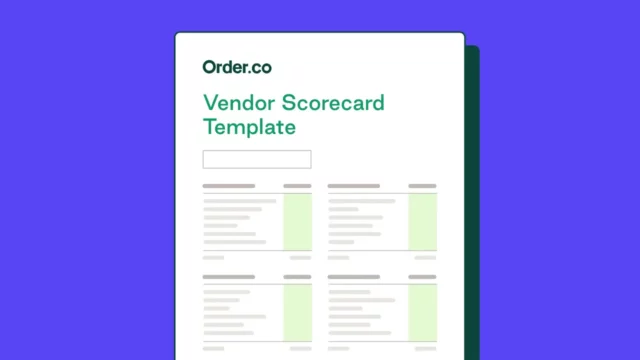
Vendor Scorecard Template
Download our free vendor scorecard to make objectively evaluating vendors easier.
What are the benefits of effective supplier performance management?
30% of supply chain disruptions cost more than $5 million, according to RapidRatings' risk survey.
Structured SPM turns raw performance data into tangible benefits:
- Lower procurement costs. Spot pricing discrepancies, reduce emergency purchases, and negotiate better terms based on performance history.
- Better quality control. Catching defect rates early minimizes rework and customer complaints.
- Stronger supplier relationships. Transparent, data-backed conversations replace subjective assessments.
- Better supplier risk management. Tracking financial health and operational stability puts you ahead of supply chain disruptions.
- Stronger contract compliance. Monitoring certifications, sustainability commitments, and regulatory adherence keeps suppliers accountable.
- Higher operational efficiency. Simpler reviews and less manual data collection free up your team.
The real payoff comes from using that data to make faster, better-supported calls about where to spend.
The supplier performance management process
Most supplier performance management programs break down into three phases:
- Set expectations and standards. Define what "good" looks like for each supplier category, using targets like on-time delivery rate, defect rate thresholds, and response-time requirements written into contracts and SLAs.
- Monitor and score. Pull performance data on a regular cadence, whether automatically through your ERP and procurement systems or manually for smaller categories, and score it against the standards you set with a vendor scorecard template so every supplier is measured the same way.
- Review and act. Bring the scores to a regular review and use what you find to trigger corrective action, renegotiate terms, or shift volume toward stronger performers.
Which metrics should you track to measure supplier performance?
Selecting the right procurement key performance indicators (KPIs) keeps you focused on what impacts your business versus what's easiest to collect.
On-time delivery and order accuracy rates
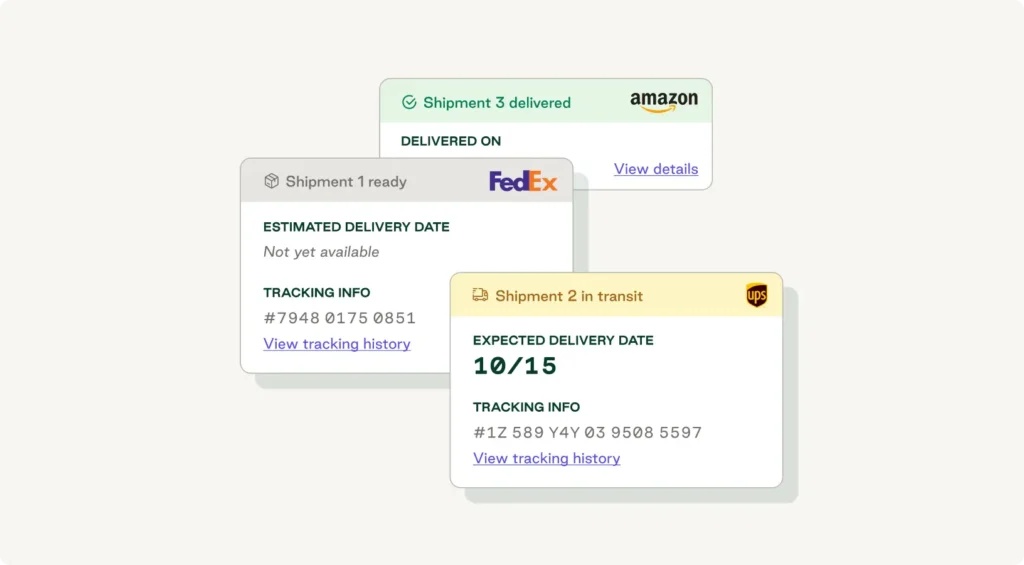
On-time delivery (OTD) measures whether suppliers ship by the agreed-upon date, while order accuracy tracks whether you receive the correct items in the right quantities. Tracking lead time adds useful context since a supplier can meet its own estimates and still miss your target delivery windows if those estimates keep increasing.
When late deliveries become a pattern, the effects cascade through your operations, resulting in delays, higher handling costs, and frustrated teams and customers alike.
Quality defect rates and return/rework costs
Defect rates reveal how often products fail to meet quality standards, with high rates signaling underlying issues with a supplier's processes, materials, or controls. Monitoring the percentage of defective units received helps you focus your supplier evaluation efforts where they're needed most.
Beyond the immediate quality issue, defective items trigger return and rework costs that add hidden expenses, including labor, shipping, and the opportunity cost of paying for the product twice.
Cost variance and total cost of ownership
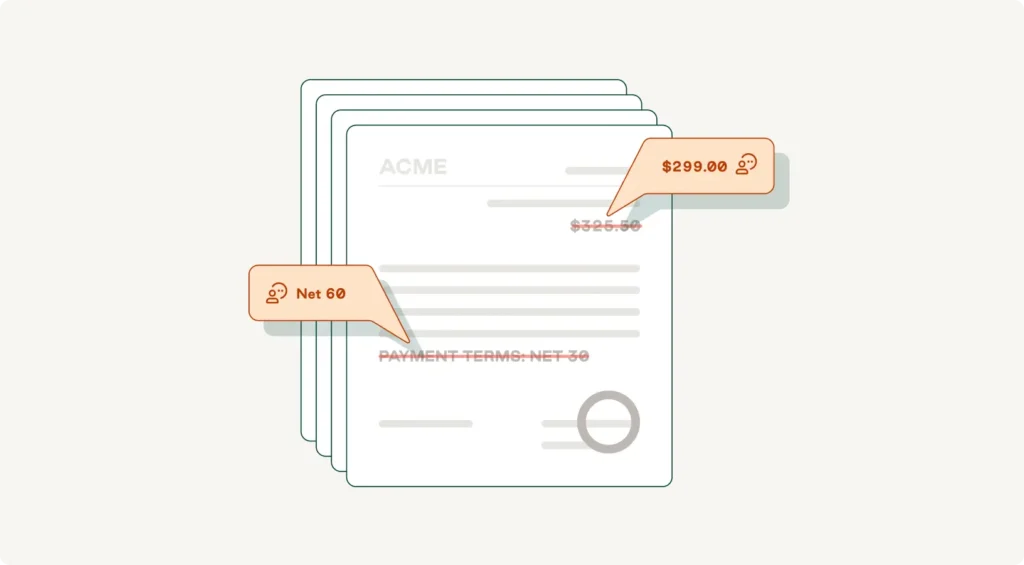
Cost variance measures the difference between contracted prices and actual invoices, and it can point to pricing errors, unauthorized charges, or a supplier failing to honor negotiated rates.
Total cost of ownership goes further than the invoice price, capturing expedited freight, warranty claims, rework, and the time spent managing chronic underperformance. A supplier with a higher unit price but a clean billing record often has a lower total cost of ownership than a cheaper one that generates constant exceptions.
Contract compliance and risk scores
Compliance metrics track certifications, safety protocols, sustainability commitments, and regulatory requirements. In regulated industries, noncompliance can mean fines, legal liability, or reputational damage.
Supply chain risk is climbing procurement leaders' priority lists. Multi-tier supplier risk now ranks as the second-biggest threat supply chain leaders face, behind cybersecurity, per KPMG's 2026 supply chain survey.
Risk scores combine financial health, geographic concentration, delivery consistency, and incident history to surface warning signs early. A vendor risk management checklist is a useful starting point if you haven't formalized this yet.
3 strategies to improve underperforming suppliers
Even your best-managed supplier portfolio includes vendors that occasionally fall short. Left unaddressed, underperformance erodes margins and creates supply chain vulnerabilities competitors can exploit.
If a supplier isn't meeting expectations, these three strategies can help close the gap.
1. Collaborative remediation plans and SLA renegotiation
If a supplier misses a target, start with a root cause conversation. Did the miss stem from a capacity issue, a quality control problem, or a communication breakdown?
Work together on a remediation plan with clear milestones, deadlines, and accountability. Update service level agreements (SLAs) to reflect realistic but ambitious goals, and outline escalation steps so both sides know what happens if performance doesn't improve.
Supplier scorecards track progress against these improvement plans so you know whether corrective action is working or if it's time for a bigger conversation.
2. Supplier development through incentives and workshops
Positive reinforcement often works better than penalties alone. Reward suppliers for exceeding performance thresholds with preferred supplier status, higher purchase volumes, faster payment terms, or formal recognition.
Continuous improvement workshops where you share best practices, teach new techniques, and pair top performers with struggling suppliers are another form of development. This kind of supplier collaboration strengthens your supplier base while reinforcing the trust good supplier relationships depend on.
3. Dynamic spend reallocation and secondary sourcing
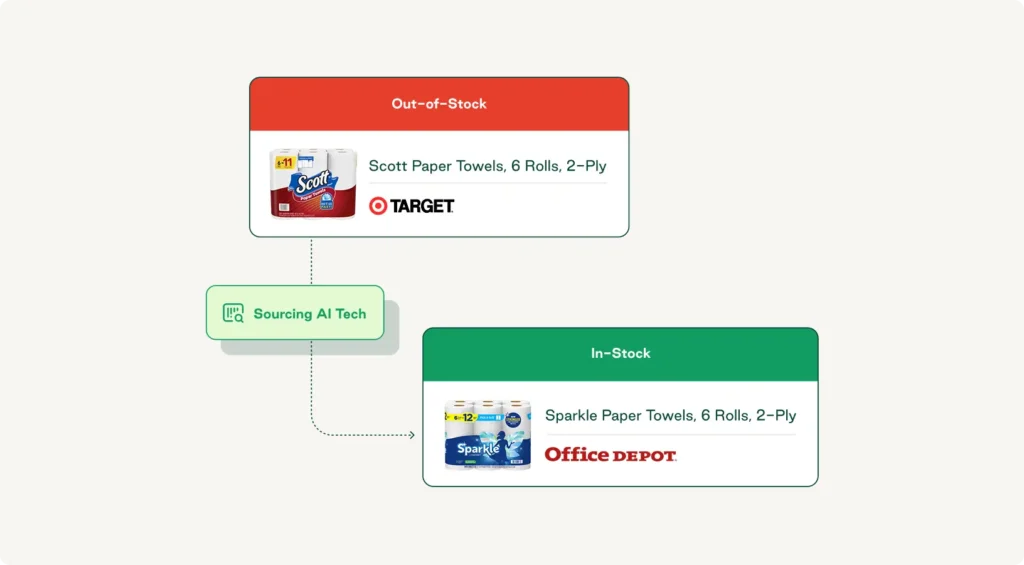
If remediation stalls, protect your operations by letting performance data guide where spend goes. Identify which suppliers consistently meet expectations, then gradually shift volume toward top performers while giving underperforming suppliers a defined window to improve.
Keep a backup option for critical categories so you can redirect purchase orders quickly during a disruption. Supplier segmentation helps you decide which relationships need a backup and which are worth deeper investment. If one supplier delivers at a 98% on-time delivery rate while another struggles at 85%, shifting volume toward the stronger performer is a reasonable procurement strategy.
Vendor Scorecard Template
Download our free vendor scorecard to make objectively evaluating vendors easier.
"*" indicates required fields
How do procure-to-pay platforms support supplier performance management?
Procure-to-pay platforms are increasingly the backbone of supplier performance management software, since performance data is only useful next to the spend and workflow data that gives it context. Connecting supplier records to your ERP systems and procurement workflows helps you monitor performance, spot risk, and make informed decisions throughout the vendor management lifecycle.
Centralized dashboards
Procurement software like Order.co brings supplier and spend information together in one place. Spend by vendor and category and order status appear on the same dashboard, so you can see where each supplier stands before your next review.
Spend analytics and scorecard templates
Order.co's spend analysis and reporting tools, paired with a free supplier scorecard template, give you a structured way to evaluate suppliers, benchmark performance, and spot trends across your vendor base.
Order.co's AI works on the spend data behind those reports. It flags unusual spend that breaks from a supplier's normal pattern, and when a supplier can't deliver, the sourcing algorithm finds the best price or options for out-of-stock goods.
Workflow support and context
Every order your team places in Order.co stays tied to the supplier it came from, and GL-coded line items sync to ERP systems including QuickBooks, NetSuite, Sage Intacct, and Workday, so your spend data stays consistent across systems.
Comprehensive supplier information management
No single system captures every data point on its own. Order.co supports the supplier onboarding process and ongoing information management by keeping order status and purchase history attached to a single supplier record, which is useful for audits and getting new team members up to speed.
WeWork used Order.co to consolidate 110 vendors onto a single platform. "Before Order.co, invoices would come to us without warning. Now, we know exactly what we are purchasing and how much every product costs," says Kyle Ingerman, Finance Transformations Senior Manager at WeWork.
Improve your supplier performance management with Order.co
Fragmented supplier data, manual performance tracking, and reactive problem-solving create unnecessary costs and risk. When you lack visibility into supplier performance, a minor issue can cascade into a disruption that reaches your customers.
Order.co gives you one view of supplier spend and orders in place of a spreadsheet tab for every vendor. With that visibility, you can spot a shift in a supplier's spend pattern before it grows into a larger problem, and bring real numbers to your next supplier review. The sourcing algorithm finds options for out-of-stock goods, and every order stays tied to the supplier record.
Ready to see your spend by supplier, order status, and purchase history in one place instead of a dozen spreadsheets? Schedule a demo with Order.co.
FAQs
A centralized supplier management platform makes it easier to track performance across multiple locations or as you scale quickly. If you run multiple locations, use standardized scorecards with core KPIs for all sites, add location-specific measures, and hold regular cross-functional reviews. If you're growing fast, build supplier data and workflows into onboarding so quality and consistency hold as your supplier count increases.
Supplier performance metrics help you detect problems early, before they disrupt operations. Declining on-time delivery rates, rising defect rates, or cost variances often signal underlying issues. When you track these metrics consistently and review trends, you can spot warning signs and put contingency plans in place to reduce supply chain risk.
Supplier performance management measures how well a supplier is meeting agreed standards, using metrics like on-time delivery, defect rates, and cost variance. Supplier relationship management is broader. It covers the ongoing collaboration, communication, and joint planning between you and a supplier over time. Performance data from SPM gives those conversations something concrete to work from.
Yes, SPM solutions can improve cost control and decision-making by providing objective, data-driven insights. Manufacturing companies can reduce quality-related costs through defect tracking, healthcare organizations can reduce risk and maintain regulatory compliance, and retail businesses can improve delivery reliability and supplier accountability. Implementation matters most. If you define clear KPIs and measure them consistently, you'll see the biggest improvement, whatever your location or sector.
Get started
Schedule a demo to see how Order.co can simplify buying for your business.
"*" indicates required fields