Spend Control: 5 Strategies to Improve Purchasing Processes in 2026

Spend Control: 5 Strategies to Improve Purchasing Processes in 2026
Most finance teams only see company spending after it happens, when the invoice hits AP or the card transaction clears. By then, they're managing consequences.
Real spend control happens earlier, at the point of purchase, with approvals, budget checks, and vendor controls built directly into the workflow before money leaves the organization.
Companies with strong spend control don’t rely solely on stricter policies or additional audits. They automate the right controls to allow teams to move quickly without overspending and give finance real visibility before it’s too late. The result is fewer surprises, a faster close, and more proactive budget management.
Spend control key takeaways
- Effective spend management requires proactive governance to control budgets before purchases are finalized.
- Relying on manual reconciliation creates a data lag that hides critical line-item visibility into how and where organizational funds are being spent.
- Significant control gaps often emerge in indirect procurement—such as office supplies and tail spend—where decentralized purchasing often bypasses formal approval workflows.
- Manual oversight becomes unsustainable as transaction volumes grow, making it necessary to automate the purchasing process to ensure every order stays aligned with company policy.
- Order.co’s vendor-agnostic platform centralizes all purchasing and automated approval workflows in one place, eliminating the visibility gaps and off-process spend that lead to budget overruns.
Download the free ebook: The Complete Guide to Procurement Management KPIs
What is spend control?
Spend control is the strategic management of the procurement-to-payment lifecycle. It uses real-time oversight to eliminate unauthorized shadow spend and keep business costs aligned with budgets. While budgeting sets targets and cost-cutting reduces them, spend control ensures purchasing behavior aligns with both.
Although most organizations have budgets, few have controls that operate at the moment of purchase. Without these controls, budgets become aspirational rather than operational.
In practice, a buyer submits a purchase request, the system checks budget availability, routes to the appropriate approver, and generates a purchase order with accurate GL coding—before the vendor is contacted.
Spend control vs. spend management
Spend management is the proactive framework of policies and tools used to govern all business spending. Spend control is the enforcement layer—the everyday processes that ensure buyers follow those policies every time they make a purchase.
Real-time budget tracking and line-item visibility are what make spend control more effective than basic expense management. When teams can see committed spend before it’s paid, they can make smarter decisions while there’s still time to act.

The Complete Guide to Procurement Management KPIs
Dive deep into how your team can benefit from tracking procurement KPIs, the 15 most important KPIs to track, and a detailed worksheet to help you calculate which KPIs suit you!
Why does spend control matter for finance teams?
According to a 2025 Institute of Financial Operations & Leadership (IFOL) survey, 68% of finance teams spend more than five days per month processing invoices, highlighting how much time manual AP work still consumes.
Without effective spend control, finance teams are forced to rely on reactive spend management and manual reconciliation, which can increase errors, create compliance gaps during audits, and slow approvals even further. Spend control helps reduce these costs by moving governance upstream into the purchasing workflow itself.
Benefits of controlling spend
Spend control's value shows up in ways that directly affect your organization's financial performance and operational efficiency.
Here's what changes when you move governance upstream:
- More capital reserves: Controlling spending at the point of purchase reduces waste and preserves capital for strategic priorities such as market expansion, weathering downturns, or capturing early-pay discounts.
- Stronger forecasting: Line-item spend visibility improves budget accuracy. When you know exactly what you're spending on office supplies or software subscriptions, for example, you build budgets that reflect reality.
- Better contract performance: Historical spend data strengthens vendor negotiations. When you can show exactly how much you've purchased, you can negotiate from a position of strength, securing lower costs, better payment terms, and more favorable relationships.
- Faster growth: The savings you capture through proactive spend management can directly fund key growth initiatives—whether scaling your team, expanding into new markets, or investing in R&D.
The impact compounds as your organization grows. When global brand, MINISO, used Order.co to add a layer of control to its ordering process, it achieved 100% on-catalog spend compliance. Now, the company has a clear budget for each store that they can track in real time.
Without this level of intentionality, the alternative is a compounding set of financial and operational risks.
What are the consequences of uncontrolled spend?
When spending happens without oversight, the consequences ripple through every corner of your financial management and accounting workflows. Here are some of the most common impacts on financial planning and operational efficiency:
- Overrun budgets become the norm: Without real-time visibility, budgets turn into suggestions rather than guardrails. Finance teams must explain variances they couldn't prevent because they only learned about them after spending occurred.
- AP teams drown in reconciliation work: Uncontrolled spend creates invoices that don't match purchase orders, expenses coded to the wrong accounts, and payments that require manual validation. AP teams spend hours tracking down approvers and fixing coding errors that wouldn't exist with embedded controls.
- Month-end close gets delayed: Closing the books takes longer when spend data is fragmented across channels. Finance teams are left tracking down receipts and reconciling transactions that should have been pre-approved and properly coded.
- Audit findings expose control gaps: External auditors flag missing approvals, inadequate documentation, and purchases that bypassed established processes. Controls that looked sufficient on paper fall apart under scrutiny.
- Cash flow becomes unpredictable: Without visibility into committed spend, cash forecasting turns into guesswork. Emergency payments disrupt planned deployment, and early-pay discounts slip away because the AP team didn't know about the invoice until it was late.
- Scaling becomes unmanageable: As organizations add more locations and team members, manual purchasing processes often break down, creating operational complexity that traditional finance teams cannot sustain without massive headcount increases.
At scale, these risks can become a crisis. When WeWork’s rapid global expansion led to over a million annual invoices, its manual procurement process reached a breaking point. Invoices frequently arrived "without warning," making cash flow unpredictable and budgeting impossible. By centralizing indirect spend and automating 3-way matching with Order.co, WeWork gained line-item visibility into every cost. This "proactive enforcement layer" enabled the company to scale across 18+ countries without hiring additional AP specialists to manage paperwork.
Spend control isn’t just about saving a few dollars on supplies; it’s about building a financial foundation that can actually support the weight of your company’s goals.
Where do most organizations lose control of spending?
Even organizations with formal procurement policies have blind spots. Spend escapes control not because people are ignoring the rules, but because the rules don't always reach the places where purchasing actually happens.
Control typically breaks down at the edges of the organization, appearing as 'shadow spend' through these common channels.
Emergency purchases
When something breaks or a deadline moves up, buyers can't wait for approval workflows. They call a vendor, place an order, and submit the paperwork later—if at all. These purchases bypass every control you've put in place, leading to overspending from buying through non-preferred vendors at higher prices.
Distributed teams using personal cards
Remote employees and field teams frequently use personal cards for work purchases and submit expense reports afterward. By the time finance sees those transactions, there's no opportunity to verify budget availability, enforce vendor preferences, or capture accurate GL coding.
Vendor portals bypassing approval workflows
Many vendors offer self-service ordering portals that make it easy for teams to reorder supplies directly—convenient for operations, but invisible to finance. These transactions often skip the PO process entirely, and invoices arrive without any corresponding approval documentation.
Subscription renewals
SaaS solutions and services typically auto-renew by default. Without a system that tracks renewal dates and triggers review workflows, these charges hit the corporate card or bank account without anyone actively approving them. Rather than a strategic choice, the renewal is a foregone conclusion.
5 strategies for effective spend control
Most organizations already know purchases should be approved before they happen, but few have an enforcement system in place. These strategies work together to move governance into the purchasing workflow itself, so you can proactively prevent budget overruns.
1. Establish a process
Many organizations discover that their procurement processes are actually a patchwork of email approvals, verbal sign-offs, and manual workarounds. To ensure this isn't the case, map your current purchasing workflow from request to payment.
A functional spend control process includes:
- Intake forms: Capture what's being purchased, why it's needed, and which budget it affects
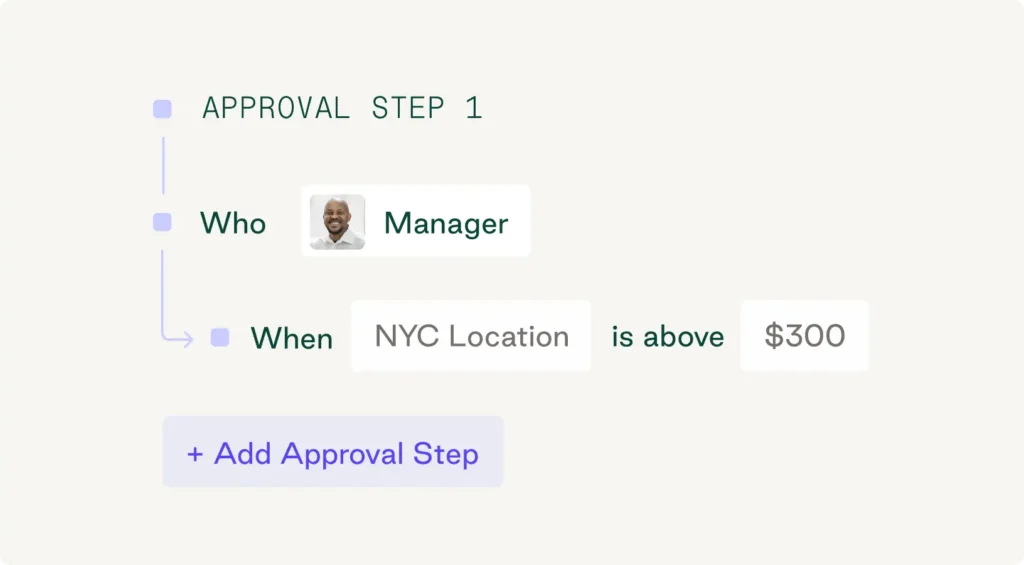
- Approval routing: Automatically send requests to the right stakeholders based on amount, category, or department
- Purchase order creation: Lock in price, terms, and coding before the vendor ships
- Receipt matching: Verify that what you ordered actually arrived
- Payment processing: Tie purchases back to the original approval and budget
Breakdowns happen when email threads bury approvals, teams create POs after the fact, and invoices arrive without approval context. The fix is to remove the friction that causes people to bypass processes.
2. Identify costly spending areas
Not all spend categories carry the same risk or opportunity for improvement. Focus your control efforts where they'll have the most impact, such as:
- Software and SaaS: Gartner projects annual global software spending to increase by 15.2% in 2026, to $1.43 trillion. Audit active subscriptions against your IT asset inventory. Identify duplicate tools, unused licenses, and forgotten auto-renewals. Establish central approval for new purchases and quarterly reviews, flagging renewals 60 days early so you can renegotiate terms or cancel.
- Tail spend: Office supplies and small purchases can create high transaction volume with low visibility. Consolidate vendors, establish preferred suppliers, and use tail spend management tools to gain control over indirect purchasing without creating bottlenecks.
- Travel and entertainment: Pre-trip approval workflows can catch outliers before expenses hit the books. Define policies before booking business-related travel expenses. Establish policies and spend thresholds for hotels, transportation, and dining.
Identifying costly spending areas isn't a one-time exercise. For example, detailed spend analytics gave Clinton Management 100% spend visibility and led to $1,200 in monthly savings on products. Build regular spend analysis into your close process so you can spot trends early and adjust controls before small issues become budget problems.
3. Limit card-based spending
Corporate cards create a fundamental problem for spend control. When someone swipes a card at a store, you don’t see what was purchased, which budget it affects, or whether it was necessary. That lack of granularity makes accurate coding nearly impossible and forces AP teams into time-consuming reconciliation work.
Pre-purchase controls flip this model. By reviewing and approving purchases before they happen, you gain visibility to verify budget availability, accurately code expenses, and catch unnecessary expenditures before they occur.
Cards still have a place for travel, emergency purchases, and small-dollar transactions. But they shouldn't be your primary purchasing method. Limit card-based purchasing and implement pre-purchase controls to gain meaningful spend control.
4. Centralize and analyze spend data
Most finance teams collect spending data. The problem is that it’s scattered across too many places. Track key details for every purchase, including:
- Vendor name and category
- Item descriptions and quantities
- GL codes and cost centers
- Approval chain and timestamps
- Budget allocation and payment terms.
Consolidate this data into a single source of truth that answers the questions businesses actually need answered: Which departments are over budget? Where are we spending more than forecasted? Which vendors represent the biggest cost exposure?
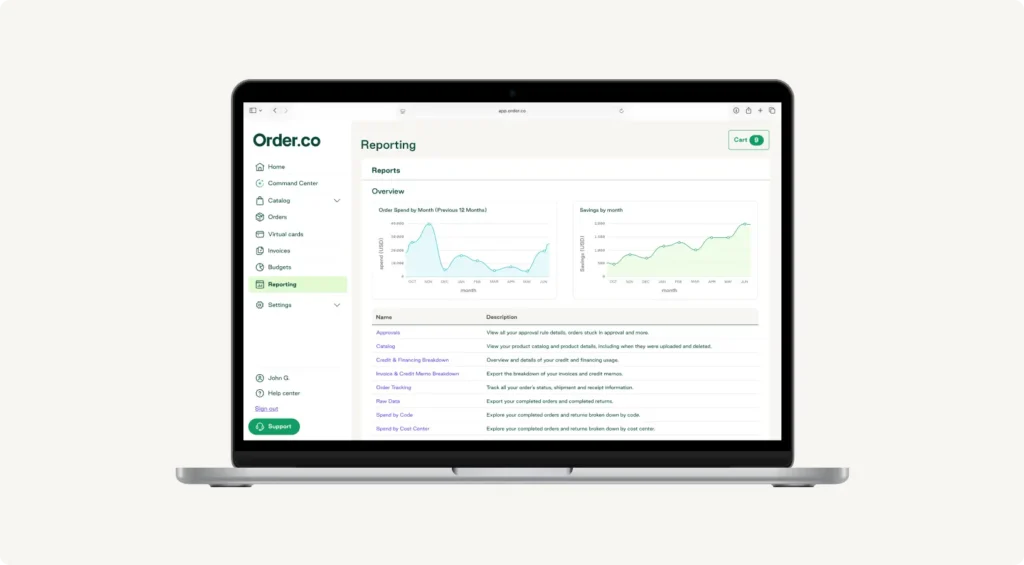
Focus on three metrics: budget variance by department, vendor concentration, and purchase order compliance—the percentage of spend flowing through your established process. This last metric directly measures how well you've embedded controls into daily operations.
5. Automate spend control
Manual procure-to-pay processes make it difficult for businesses of any size to maintain effective spend controls. As company expenses grow, organizing, verifying, and updating spend data becomes a constantly moving goalpost.
Automation enforces spend control when transactions occur, so budget checks, instant approval routing, and automatic invoice coding happen in real time.
Automation delivers the most value in these specific areas:
- Approval workflows: Requests route automatically based on amount, category, or department. A $500 supply order follows one path, a $50,000 software contract another—with full audit trails.
- Budget alerts: Real-time notifications tell you when spending approaches thresholds so you can catch overruns before it’s too late.
- Vendor consolidation: Systems flag duplicate vendors across teams, creating opportunities for consolidation and negotiation.
- Automated coding: Invoice data flows into your accounting system with correct GL codes, cost centers, and project tags.
Order.co embeds these controls into the purchasing workflow, so approvals occur before spend, budget tracking happens in real time, and invoices automatically match purchase orders.
The Complete Guide to Procurement Management KPIs
Dive deep into how your team can benefit from tracking procurement KPIs, the 15 most important KPIs to track, and a detailed worksheet to help you calculate which KPIs suit you!
"*" indicates required fields
What to look for in spend control software
Spend control platforms fall into two categories: reporting tools that analyze spend after it happens and embedded systems that control spend before the transaction clears. The first shows where the money went, while the second guides where it goes prior to purchase.
Prioritize these capabilities when evaluating solutions:
- Line-item visibility: Item-level detail improves GL coding accuracy, surfaces true purchasing patterns, and gives teams better data for savings, sourcing, and vendor negotiations.
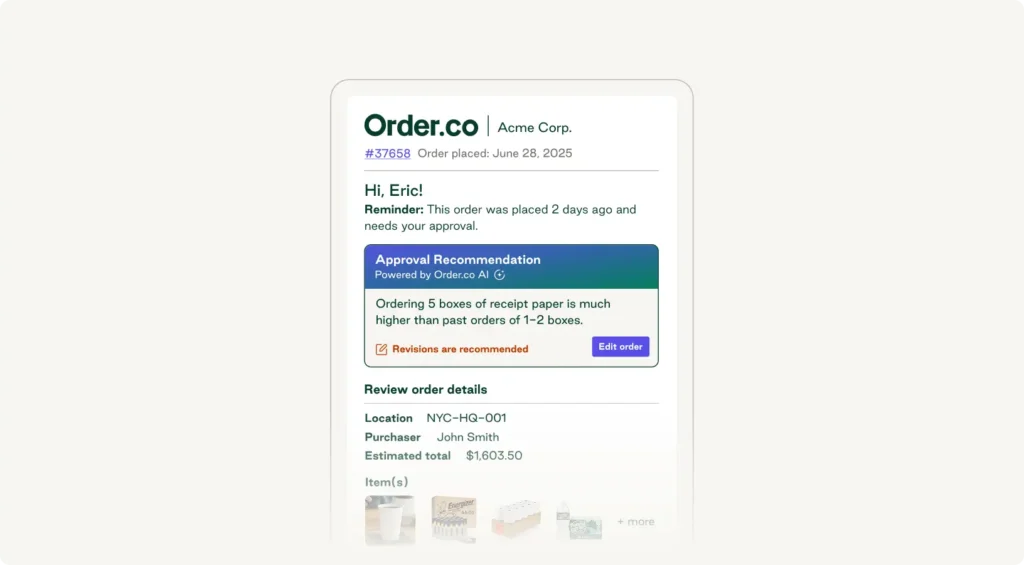
- Embedded approvals: Governance at the point of purchase prevents maverick spend. The right software that routes requests through approvals, budgets, and policy guardrails before orders ever reach vendors.
- Vendor consolidation: Fragmented vendor lists erode your negotiating leverage. Curated catalogs and pre-negotiated pricing steer buyers toward approved suppliers without adding friction.
- Invoice management: Full invoice lifecycle coverage eliminates manual handoffs between procurement and AP, and automated invoice processing catches discrepancies immediately.
- ERP integration: Direct accounting or ERP integration reduces duplicate entry and keeps purchasing, invoice, and coding data synced with financial systems.
- Multi-entity and location controls: Location-specific budgets, role-based permissions, and centralized reporting help businesses with multiple locations, departments, or entities control distributed spend without losing local flexibility.
The right spend control software embeds governance into purchasing, giving finance teams true spend visibility and saving everyone time and manual effort down the line.
Embed spend control into your purchasing system with Order.co
Order.co frees AP and finance teams from the endless cycle of traditional purchasing management by transforming reactive reporting into automated governance that guides every purchase, enabling real purchasing control.
The platform provides teams with integrated spend control through automated workflows for requests and approvals, dynamic spend policies and transaction limits, and curated purchasing through preferred vendors and providers.
Order.co combines real-time spend tracking and budget visibility with faster, more efficient invoice management. Audit-ready reporting and accounting system integration ensure compliance, while timely payments enable early-pay discounts that improve your bottom line.
If your current process is at a breaking point, schedule a demo to see how Order.co puts spend control back in your teams’ hands—with full visibility into purchasing before money ever leaves your business.
FAQs about spend control
Get started
Schedule a demo to see how Order.co can simplify buying for your business.
"*" indicates required fields